Prosecco is one of the most well-known sparkling wines in the world. You will encounter it at toasts, in aperitifs, in cocktails like the Spritz or Bellini, at weddings and on ordinary Friday evenings. This very accessibility and popularity, however, has led to a market where wines of vastly different quality all carry the Prosecco name. From industrially produced cheap bottles to wines from the finest slopes of Valdobbiadene that hold their own against many Champagnes.
The question, then, is what makes Prosecco good and how to tell a quality bottle from an average one. The answer is not in the price or the label design. It lies in several specific elements that together form the anatomy of a perfect Prosecco. Origin, grape, production method, sweetness level, and flavour profile. Once you understand these five components, you can navigate both the shelves and the price tags.
In this article, we will go through these elements one by one. We will look at why origin matters so much, why not every sparkling wine made from Glera is Prosecco, and how to correctly read the DOC and DOCG designations. At the end, we will show one specific example from the Solo Spirits range that ticks all the boxes of a quality Prosecco.
Origin: why it matters
Prosecco is not a grape variety but a protected designation of origin. It is produced exclusively in northeastern Italy, across nine provinces of the Veneto and Friuli Venezia Giulia regions. Any sparkling wine made from Glera outside this area cannot be called Prosecco.
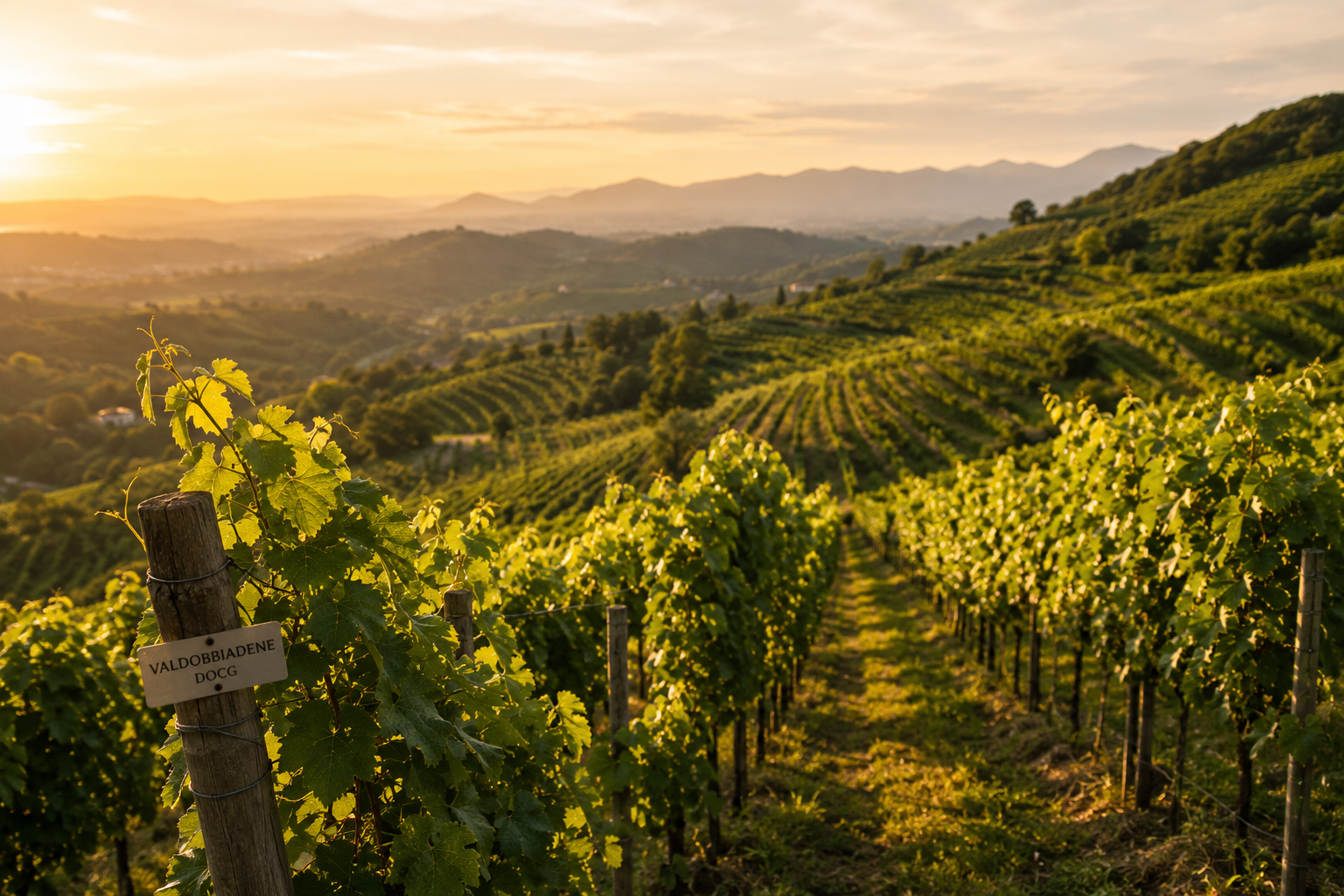
Within this territory, there are three quality tiers. The lowest is Prosecco DOC, which covers the largest production area and accounts for the vast majority of bottles on the market. A higher tier is Prosecco Superiore DOCG, encompassing two specific zones: Conegliano Valdobbiadene and Asolo. These hilly regions have been listed as a UNESCO World Heritage Site since 2019. The highest tier is Rive and Cartizze, which designate specific slopes with exceptional terroir.
When you see DOCG on a bottle, it means stricter cultivation rules, lower yields per hectare, and higher quality control standards. The price difference between DOC and DOCG is justified and noticeable in the glass.
The grape: Glera and its character
Prosecco is made from at least 85% Glera. The remainder can include traditional varieties such as Verdiso, Bianchetta, Perera, or Glera Lunga. Glera is a variety with thin skin, higher acidity, and a delicate aromatic profile. That is precisely why it suits sparkling wines in the style we know Prosecco for.
Young Prosecco is dominated by notes of green apple, pear, white flowers, and sometimes citrus and gentle herbs. Unlike Champagne, which gains its complexity through long lees ageing, Prosecco is built on freshness, fruitiness, and immediate drinkability. It is drunk young, ideally within two to three years of the vintage.
Production method: Charmat and its consequences
Prosecco is made using the Charmat method, also known as Martinotti. The secondary fermentation, which gives the wine its bubbles, takes place in sealed stainless steel tanks rather than in individual bottles as with Champagne (the classic method). This process is faster, cheaper, and preserves the freshness and primary fruit aromas of the grape.
This is a meaningful distinction. Champagne seeks complexity, layering, and notes of bread, yeast, or nuts. Prosecco takes the opposite path. The goal is freshness, clarity, and fruit-driven directness. Neither is better; they are two different styles with different aesthetics.
A quality gradient within the Charmat method does exist, however. Longer secondary fermentation in the tank, more careful grape selection, and slower processing lead to finer and more persistent perlage, deeper profile, and better balance. These details are what separate premium Proseccos from average ones.
Sweetness levels: what to watch for
On the Prosecco label, you will find a designation that tells you how much residual sugar the wine contains. This is one of the most overlooked pieces of information, even though it fundamentally shapes both the taste and the wine’s use.
Brut Nature (0 to 3 g/l of sugar) is the driest style, showing the wine in its purest form. Without a sugar veil, fully exposed to its origin and grape quality.
Extra Brut (up to 6 g/l) is also very dry, with just a touch more softness.
Brut (up to 12 g/l) is the most widespread style and the most versatile with food.
Extra Dry (12 to 17 g/l), despite its misleading name, is a slightly sweeter style often used in cocktails.
Dry (17 to 32 g/l) is distinctly sweet and relatively rare today.
For most situations, especially for standalone drinking and food pairing, the Brut and Brut Nature styles are recommended. This is where the wine’s quality shows most clearly.
Ako rozlíšiť dobré Prosecco?
When choosing, pay attention to four things.
Označenie DOCG instead of DOC. The price difference is a few euros, the difference in the glass is significant.
Specific village or slope named on the label. If you see names like Valdobbiadene, Cartizze, Rive di, or Asolo, this points to a more precise origin and higher quality.
Sweetness level. Brut Nature and Brut are a reliable choice for those who want to get to know the wine without a sugar filter.
Fineness and persistence of the perlage. You cannot tell from the bottle, but you can in the glass. Quality Prosecco has small, dense, lasting bubbles, not coarse and quickly vanishing ones.
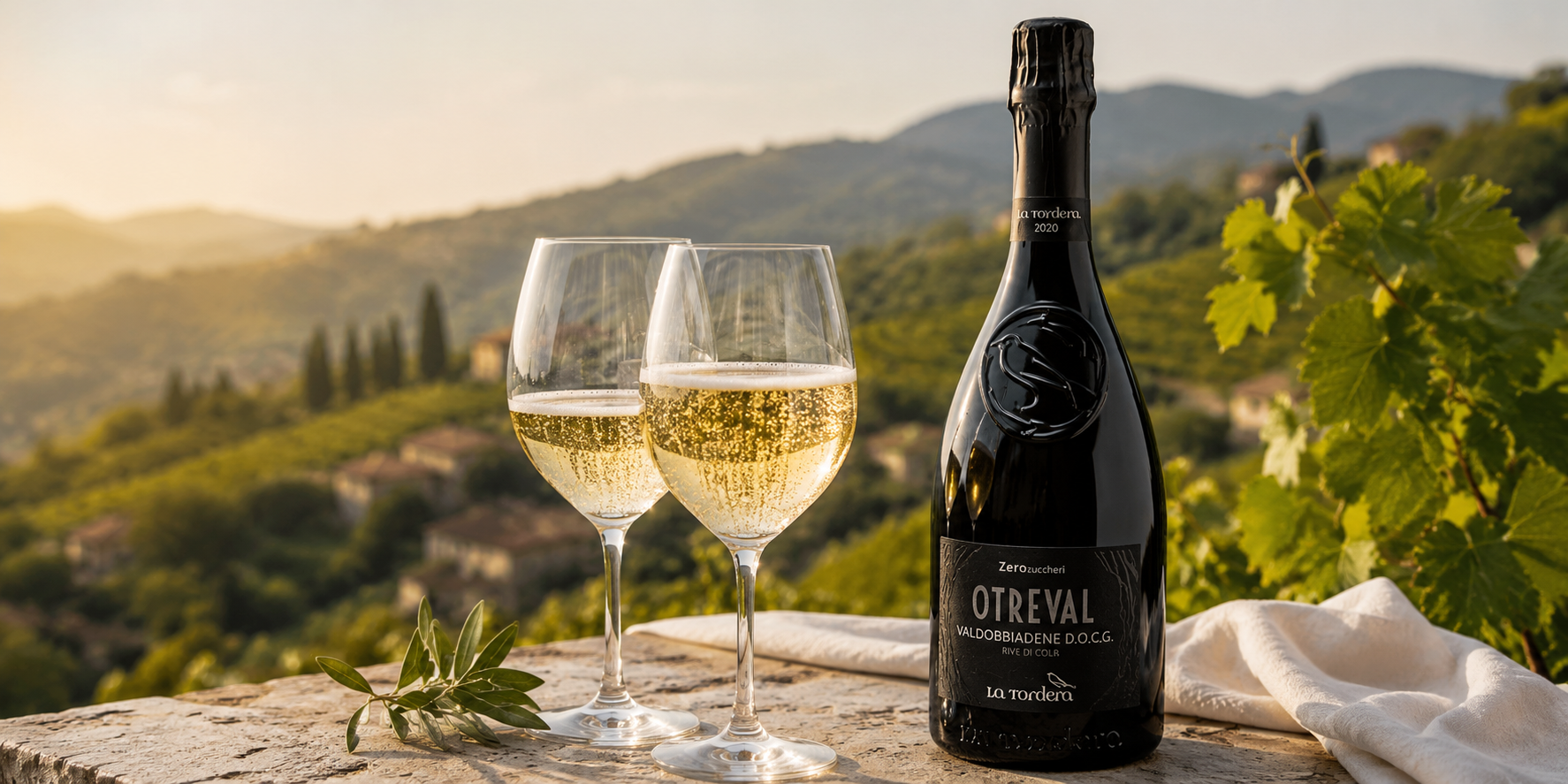
Solo Spirits tip: La Tordera Prosecco Otreval DOCG Zero
From the current selection, La Tordera Prosecco Otreval DOCG Zero stands out. It comes from the Italian winery La Tordera, located at the heart of the Valdobbiadene Superiore DOCG area, between Venice and the Dolomites. It is, therefore, a Prosecco of the highest quality category.
Otreval is in the Brut Nature style, meaning zero residual sugar. The wine has a brilliant straw-yellow colour with greenish reflections and a very fine, persistent perlage, exactly the type of bubbles that characterise quality Prosecco. On the nose, it opens with delicate floral notes that evolve into fuller fruity aromas, with the signature Nashi pear and white apple blossom. On the palate, it is fresh and elegant, with lively acidity, juiciness, and a refined fruit character.
Basic wine parameters:
Volume: 750 ml
Alcohol: 12 %
Residual sugar: Brut Nature (dry)
Origin: Valdobbiadene, Italy
Price: €21.00 incl. VAT
It works well as an aperitif, with light starters, seafood, sushi, young cheeses, or for a quiet summer evening when the wine is not an accompaniment to food but a standalone experience.
How to serve Prosecco properly
The optimal serving temperature is 6 to 8 °C. Prosecco that is too warm loses freshness, while too low a temperature closes off the aroma. The glass should be tulip-shaped or a narrow wine glass, not a flat coupe, which lets the bubbles escape quickly.
The bottle should be opened carefully, with a gentle twist, not a loud pop. A quiet sound on opening is a mark of professional handling and preserves both the wine and the bubbles. Serve immediately after opening; once opened, Prosecco rapidly loses its perlage.
A quality Prosecco does not deserve to be lost in a cocktail. Try it on its own first, in a proper glass and at the right temperature. Only then will you understand why the anatomy of this wine is composed of exactly what it is composed of.
For the full selection of sparkling wines, visit solo-spirits.com.